
High-level Policy Roundtable on“Bridging the Rural-Urban Divide in Reliable and Quality Power Supply: A Path to Equitable Development with Focus on Uttar Pradesh”
Lucknow |
“Electricity supply is not just for light and fan it is a matter of dignity, honour and livelihood”,Mr Suresh Kumar Agarwal, Former Chairman and Member, Uttar Pradesh Electricity Regulatory Commission (UPERC), expressedin hiskeynote address at the Roundtable titled “Bridging the Rural-Urban Divide in Reliable and Quality Power Supply: A Path to Equitable Developmentwith focus on Uttar Pradesh”, organised by APCO in collaboration with Chintan Research Foundation (CRF)on July 07 in Lucknow.
He further added that past reforms successfully expanded electricity access through generation capacity and nationwide electrification, but reliability and service quality,particularly in rural areas,continue to remain major challenges. Addressing network constraints, staffing shortages, distribution planning, and monitoring rural feeders is essential.
In his welcome address, Mr Vipin Chanddra, Associate Director at APCO, welcomed participants and discussants for the event.
Reflecting on India’s electrification journey in his opening address, Dr Debajit Palit, Centre Head, Centre for Climate Change and Energy Transition, CRF, noted that while India has made remarkable progress in expanding electricity access, the next phase of reforms must focus on reliable, quality, and consumer-centric power supply. The electricity sector is at a critical inflection point, with renewable energy increasingly meeting demand. Distribution remains the vital link between policy and consumers, requiring greater reliability and financial sustainability. Uttar Pradesh, driven by rapid demand growth, expanding industrialisation, PM Surya Ghar, and persistent rural–urban disparities, offers an important case for advancing equitable, quality power supply through immediate structural reforms.
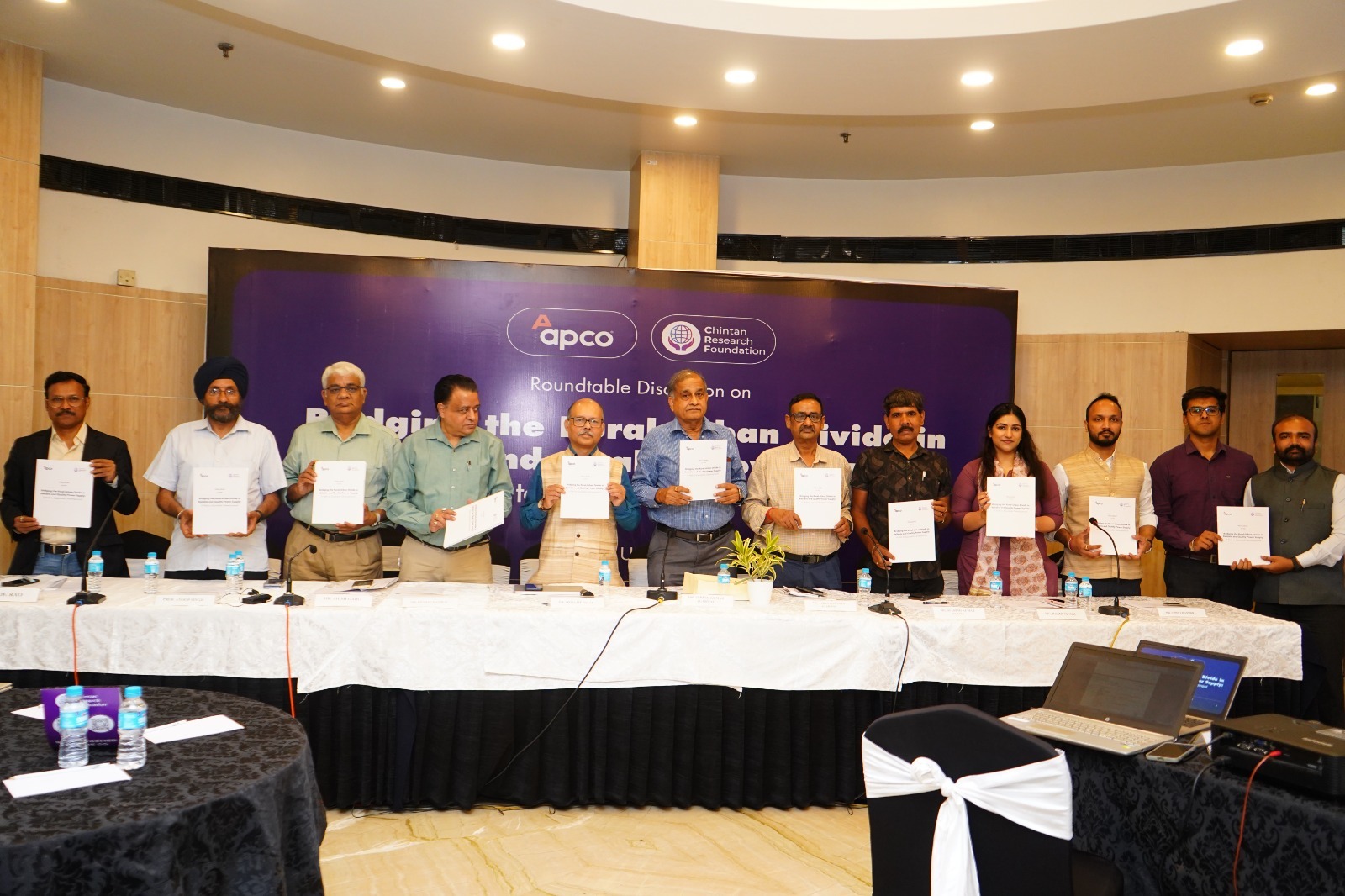
At the inaugural session, the keynote speaker and panelists unveiled a Policy Brief authored by researchers from APCO and CRFtitled “Bridging the Rural-Urban Divide in Reliable and Quality Power Supply: A Path to Equitable Development.”
The moderated discussion, chaired by Dr Debajit Palit, brought together experts from the policy, regulatory, operations, and consumer rights domains. The discussion focused on strategies to ensure a reliable and high-quality power supply while accelerating the energy transition.
The panel deliberated on several important themes, including bridging the rural–urban divide in electricity access by ensuring equitable, affordable, and consumer-centric power services; strengthening the financial and operational sustainability of distribution utilities through improved last-mile connectivity and enhanced DISCOM performance; advancing reliable and high-quality power supply to support industrialization, economic growth, and rising electricity demand; and leveraging smart technologies, digital monitoring, and policy alignment with the National Electricity Plan (NEP) 2026 to build a future-ready power sector in Uttar Pradesh.
The panellists,Mr Vikas Chandra Agarwal, Former Director (Distribution), UPERC, Mr Piush Garg, Former Director (Operations), UPPCL,Prof. Anoop Singh, Founder, Centre for Energy Regulation (CER) and Energy Analytics Lab (EAL), IIT Kanpur, Ms Rashi Singh, Programme Lead (Lucknow), Council on Energy, Environment and Water (CEEW), Mr. Avadhesh Kumar Verma, Chairman, UP Rajya Vidyut Upbhokta Parishad, Mr. Keshav Mathur, President (Lucknow Unit), Laghu Udyog Bharti, Prof D. Tripati Rao, Professor of Economics, IIM Lucknow also discussedthat inadequate distribution infrastructure remains the biggest barrier to reliable electricity supply, particularly in rural areas where demand has grown rapidly but networks continue to be designed for outdated sanctioned loads. Speakers highlighted the need for additional substations, stronger financing, human resource, local maintenance teams, and deployment of SCADA in rural networks.
They also noted that stagnant tariffs, low rural revenue recovery, and staff shortages constrain DISCOM performance, while targeted subsidies for rooftop solar could support vulnerable consumers. The discussion further emphasised transparent governance, responsive grievance redressal, digital complaint tracking, and greater consumer and employee accountability to improve service delivery.
Concluding the roundtable, Mr Abhinav Khansili, Project Consultant, APCOdelivered the vote of thanks thanking all the discussants and participants.